As heatwaves bake rivers and reservoirs, a quiet shift is unfolding inside pipes, taps and summer swimming spots.
Water that looks crystal clear and tastes perfectly normal can still harbour microscopic drifters that shrug off standard treatments and turn up in unexpected places, from garden hoses to hospital plumbing.
The stealthy life of free‑living amoebae
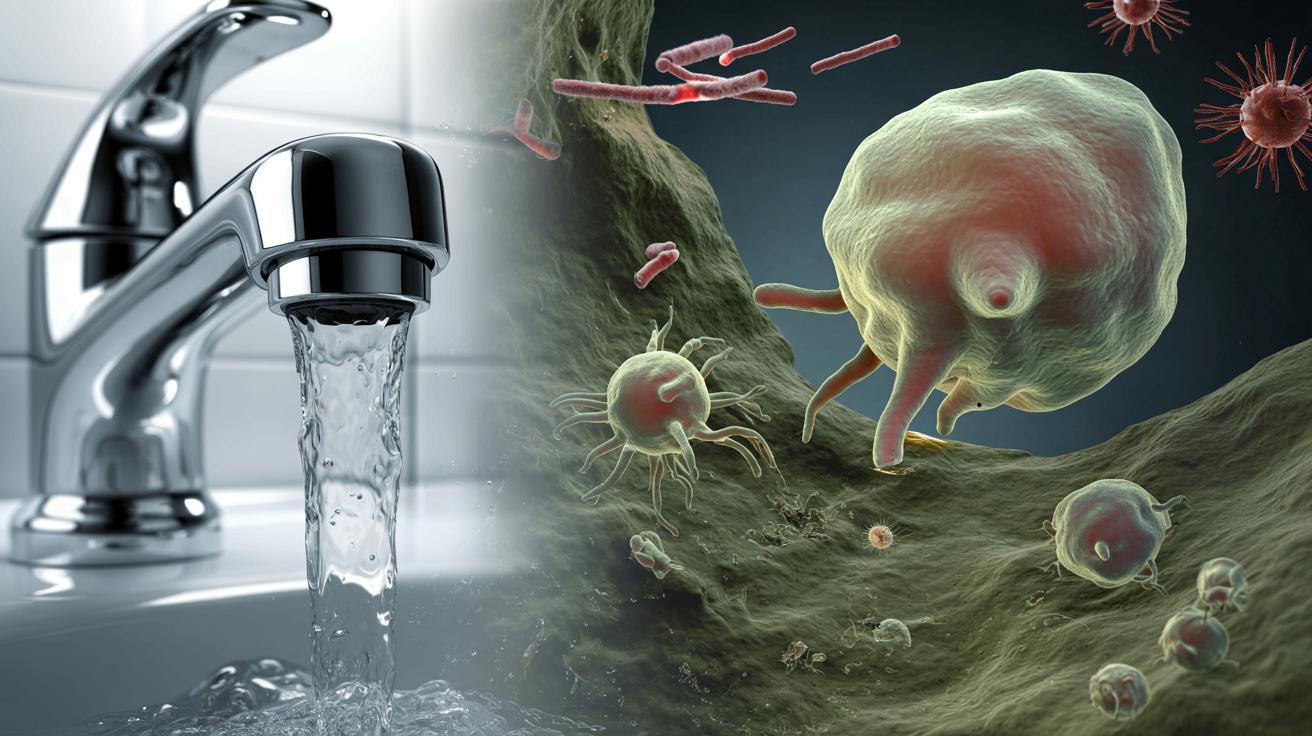
Free‑living amoebae are single‑celled organisms that roam without needing a host. They live in lakes, puddles, wastewater plants and the inner skin of our plumbing. They glide using tiny temporary extensions, called pseudopods, which act like arms and legs at the same time.
These amoebae graze on bacteria and other microbes. They engulf them whole, a bit like microscopic vacuum cleaners sucking up whatever crosses their path. For decades, most researchers wrote them off as background noise, hard to culture, tricky to track, and rarely linked to human disease.
That view is changing. Several species have now been tied to severe eye and skin infections, especially in people wearing contact lenses or with weakened immune systems. One of them, Acanthamoeba, can scar the cornea and threaten eyesight. Another, Balamuthia mandrillaris, has caused slow, deadly brain infections around the world.
Scientists are realising that these tiny shape‑shifters are far tougher than many classic waterborne germs and far more widespread than monitoring systems suggest.
They are skilled survival artists. When conditions turn harsh, they transform into a hardy cyst, wrapping themselves in a thick shell. In this state, they can ride out drying, chemical shocks and temperature swings that would kill most bacteria.
Naegleria fowleri: the amoeba that reaches the brain
The most notorious member of this group is Naegleria fowleri, often nicknamed the “brain‑eating” amoeba. It thrives in warm fresh water, typically between 30 and 45°C, a temperature range now more common during long, hot summers. Shallow lakes, slow rivers, hot springs, under‑chlorinated pools and even poorly maintained splash pads can offer ideal conditions.
Infection does not happen by drinking contaminated water. The critical route is through the nose. When people dive, jump, or get a strong rush of warm water into their nasal passages, the amoeba can latch onto the lining, then move along the olfactory nerve into the brain.
Once there, it triggers a condition called primary amoebic meningoencephalitis. Early signs appear a few days after exposure: headache, fever, nausea, neck stiffness and confusion. On paper, it looks almost identical to routine bacterial meningitis, which can delay the right diagnosis.
➡️ Abandoned in adulthood, this habit could quietly extend your wellbeing
➡️ An Oat-Based Diet Cuts Cholesterol In Just Two Days
➡️ Loose eyelid syndrome can reveal a hidden sleep disorder
➡️ Caffeine Becomes A Molecular Switch Envisioned For Treatment
➡️ Because of our lifestyle, osteoarthritis is surging among young adults worldwide
➡️ As the Moon Gradually Drifts Away From Earth, Our Days And Tides Quietly Change
➡️ What if the key to fighting Alzheimer’s wasn’t in the brain, but in the muscles?
➡️ Unexpected find: thousands of nests spotted beneath Antarctic ice
The disease progresses rapidly. Swelling in the brain leads to seizures, coma and, in most recorded cases, death within days. Fewer than 5% of patients survive, even with aggressive treatment.
Naegleria fowleri infections are extremely rare, but the fatality rate sits above 95%, and confirmed therapies remain limited once symptoms kick in.
When tap water is part of the story
Most known cases are linked to swimming in warm natural water. Yet investigations have also traced infections to everyday habits at home. Nasal rinsing with warm tap water, for instance, has been implicated in several deaths. The water met drinking standards, but had not been sterilised for contact with nasal tissue.
Public health agencies now advise that nasal irrigation devices, such as neti pots, should only use boiled then cooled water, distilled water, or sterile saline. Simply turning on the tap and letting it run warm is not enough to guarantee safety if Naegleria is present somewhere in the system.
Why chlorine is not a silver bullet
Chlorination transformed public health in the 20th century, slashing rates of classic waterborne diseases like cholera and typhoid. Yet amoebae sit in a different league of resilience.
Free‑living amoebae can resist chlorine at levels that easily kill many bacteria. Their cyst form is especially hardy, allowing them to survive in treated networks long after a flushing or shock‑chlorination event.
Inside pipes and storage tanks, slimy layers known as biofilms build up on surfaces. These biofilms are made from bacteria, fungi and organic debris. Amoebae hide within this shielded layer, where disinfectants penetrate poorly. There, they can feed, multiply and sometimes re‑emerge into the water flow.
Once embedded in biofilms, amoebae are no longer just contaminants; they become tiny fortresses that protect other, more dangerous microbes.
The amoeba as a microscopic bodyguard
One of the most unsettling roles of these organisms is as a “Trojan horse” for pathogens. Some bacteria and viruses survive better inside amoebae than outside. The amoeba protects them from chlorine, temperature shocks and even from our immune defences if they end up in the body.
Studies have shown that amoebae can act as shelters for:
- Legionella pneumophila, the cause of Legionnaires’ disease
- Non‑tuberculous mycobacteria, linked to lung and skin infections
- Various enteric viruses, including noroviruses that cause severe gastroenteritis
Some researchers argue that learning to survive inside amoebae may also prime these bacteria to withstand human white blood cells, which use similar tactics to try to digest invaders. That raises fears of microbes becoming harder to treat, not only in water but also in hospitals.
Climate change stretches the danger zone
As global temperatures rise, the geographic footprint of Naegleria fowleri is shifting. Regions once considered too cool for it are recording their first infections. Warmer summers keep lakes and rivers at higher temperatures for longer, extending the season during which the amoeba can thrive.
Ageing water infrastructure adds another layer of vulnerability. Long, complex distribution networks allow warm pockets and dead ends where disinfectant levels drop and biofilms thicken. In some towns, pipes laid for cooler climates are now being pushed beyond the temperature ranges for which they were designed.
| Factor | Effect on Naegleria risk |
|---|---|
| Longer heatwaves | Keep fresh water within the amoeba’s ideal temperature window |
| Shallow, stagnant water | Promotes warm spots with low chlorine levels |
| Old pipe networks | Encourage biofilm growth and hidden survival niches |
| Insufficient maintenance | Makes it harder to control disinfectant levels and monitor quality |
How people can lower their personal risk
For most households, the absolute risk remains low, but a few simple habits can help stack the odds further in your favour, especially in hot regions.
- Avoid jumping or diving into warm, shallow freshwater, particularly if warning signs are posted.
- Use nose clips when swimming in lakes and rivers during heatwaves.
- Do not use untreated or unboiled tap water for nasal rinses; use boiled, cooled or distilled water instead.
- For private pools, keep chlorine and pH within recommended ranges and clean surfaces to disrupt biofilms.
- Let garden hoses run until the water cools before spraying faces and children, especially after long sun exposure.
Most people will never encounter Naegleria fowleri, yet a few targeted precautions can reduce an already tiny risk even further.
What “One Health” means for our taps
Researchers increasingly argue for a “One Health” approach, which treats human health, environmental conditions and animal health as part of the same puzzle. In the case of amoebae, that means monitoring not only drinking water plants, but also lakes, irrigation channels and industrial cooling systems.
Better maintenance of distribution networks, regular flushing of stagnant segments, and smarter monitoring for biofilms can all reduce the micro‑habitats where amoebae flourish. Training plumbers, pool operators and healthcare workers to recognise the issue gives another layer of protection.
Key terms and scenarios to keep in mind
The term “brain‑eating” amoeba is dramatic, and for families who have lost someone to it, the impact is devastating. At the same time, context helps. Millions of people swim in warm lakes every year without incident. The microbe needs just the right conditions and the right route of entry to cause harm.
Think of a hot, late‑summer afternoon at a shallow reservoir. The water line has dropped. The sun has warmed the top metre to bath‑like temperatures. Children run along the shore and cannonball into the cloudy shallows, noses unprotected. If Naegleria fowleri is present, this is the sort of moment when exposure risk climbs, even if the chances for any one person are still very low.
On a different day, imagine someone with chronic sinus problems using a neti pot filled with lukewarm tap water from a rural supply, without boiling it first. The water meets legal drinking standards, yet it has not been sterilised. In rare circumstances, that routine could provide the amoeba with a shortcut to the brain.
Understanding these scenarios, and the biology behind them, allows public health agencies and individuals to adjust behaviour without panic. Chlorine alone will not solve the problem. Smarter infrastructure, more vigilant maintenance, and a few everyday habits can together keep this resilient amoeba from turning up where it causes the most harm.