In labs on the other side of your morning mug, scientists are quietly turning a everyday stimulant into something far stranger.
Instead of just keeping people awake, caffeine is being re-engineered as a tiny on–off button for genes, with the long-term goal of controlling therapies from inside the body using nothing more dramatic than a cup of coffee.
Caffeine as a remote control for cells
For years, bioengineers have tried to gain precise, real-time control over what human cells do. They want ways to tell cells when to divide, when to release hormones, when to kill a tumour, or when to stand down. One promising tactic relies on so‑called “chemical switches” that flip cellular pathways on or off using a drug or a small molecule.
The latest twist comes from the lab of Professor Yubin Zhou at the Institute of Biosciences and Technology at Texas A&M University. His team has adapted that idea using nanobodies – tiny fragments of antibodies – that respond specifically to caffeine.
Caffeine, one of the most widely consumed psychoactive substances on the planet, is being turned into a programmable signal for engineered cells.
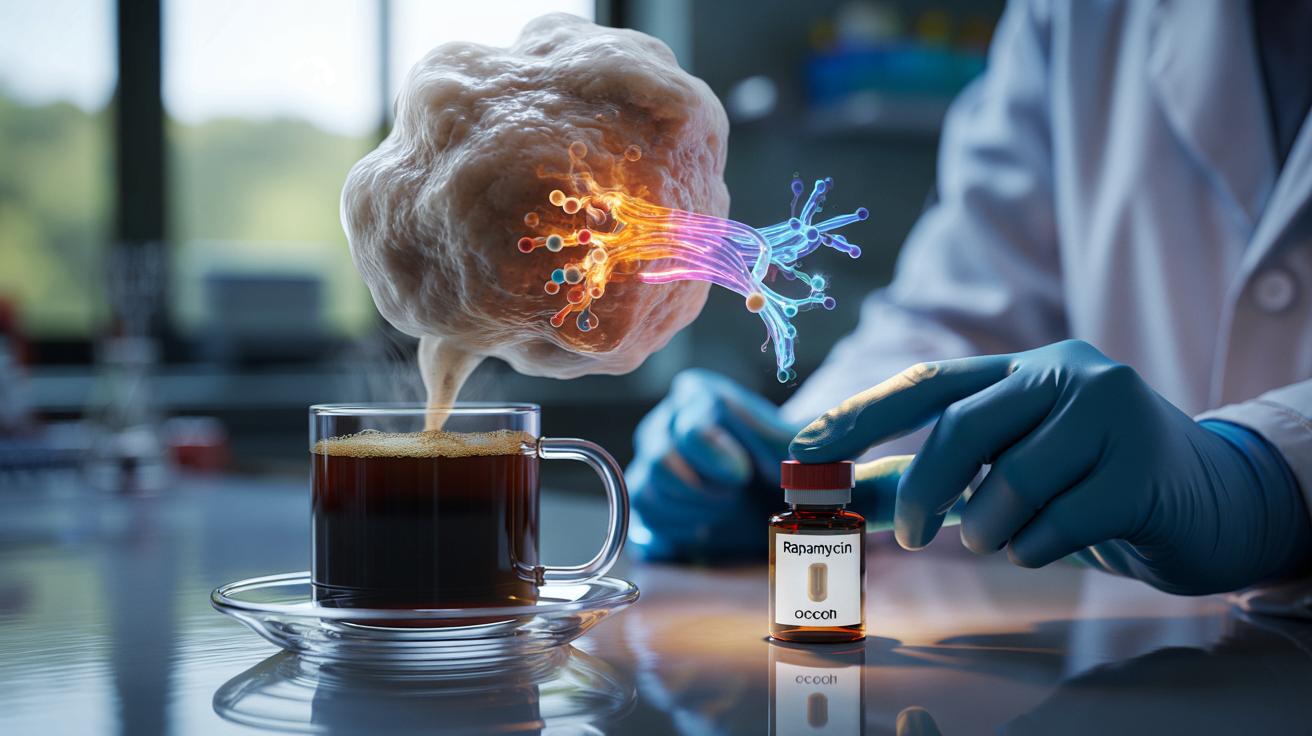
By redesigning earlier systems such as COSMO (caffeine-operated synthetic module) and UniRapR (a rapamycin-activated system), Zhou’s group built two new platforms with names that sound more like gaming hardware than medical tools: CHASER and RASER.
How the CHASER switch works inside a cell
CHASER is built around a nanobody that only becomes active when it binds caffeine. This nanobody can be fused to different cellular components, effectively wiring caffeine sensitivity into chosen signalling pathways.
Once this construct is inserted into a human or animal cell in the lab, the cell stays quiet until caffeine appears. The system reacts at very low doses – down to around 65 nanomoles, according to the team – far below the concentrations that typically cause jittery hands or a racing heart.
Below a certain threshold of caffeine, CHASER remains off, which sharply limits unintended background activity and reduces unwanted side effects.
In proof‑of‑concept experiments, the researchers linked CHASER to TrkA, a receptor involved in growth, survival and differentiation of nerve cells and other cell types. When caffeine was added, TrkA signalling fired up.
➡️ Unexpected find: thousands of nests spotted beneath Antarctic ice
➡️ As the Moon Gradually Drifts Away From Earth, Our Days And Tides Quietly Change
➡️ What if the key to fighting Alzheimer’s wasn’t in the brain, but in the muscles?
➡️ The “brain‑eating” amoeba shrugs off chlorine and slips into our water systems
➡️ Loose eyelid syndrome can reveal a hidden sleep disorder
➡️ Abandoned in adulthood, this habit could quietly extend your wellbeing
➡️ An Oat-Based Diet Cuts Cholesterol In Just Two Days
➡️ Because of our lifestyle, osteoarthritis is surging among young adults worldwide
From a sip of coffee to gene activation
Triggering TrkA set off a classic cascade inside the cell. Calcium levels spiked, the MAPK/ERK pathway switched on, and downstream genes began to respond. To make the effect visible, the team attached reporter systems controlled by response elements such as:
- NFAT (nuclear factor of activated T cells)
- CRE (cAMP response element)
- SRE (serum response element)
These elements helped amplify the signal, reaching activation levels up to roughly eight times baseline, while still remaining tightly tied to the presence or absence of caffeine in the medium.
The striking part is not only the strength of the response, but its tunability. Change the amount of caffeine, and you modulate how strongly the cell reacts. That dose–response curve makes CHASER feel less like a crude on–off switch and more like a dimmer for genetic circuits.
RASER: the off switch that uses another drug
Caffeine alone does not solve everything. There are times when clinicians might want to shut a therapy down quickly, or pause it if side effects appear. For that, Zhou’s team turned back to rapamycin, a drug already used in transplant medicine and cancer.
RASER reverses the logic of CHASER. Instead of bringing pieces together, it is designed so that rapamycin pulls engineered components apart. When rapamycin is present, the system breaks up and the signal stops.
Where CHASER lets caffeine drive activity, RASER offers a red button: a way to separate modules and silence engineered genes on demand.
By combining the two systems, researchers gain something rare in gene control technologies: reversible, two‑way regulation. One common molecule, caffeine, can be used for activation. A clinically familiar drug, rapamycin, can interrupt that activity when required.
Imagining coffee‑adjusted therapies
The early work sits firmly in cell cultures, not humans. Still, the scenarios it suggests are striking. Picture T cells engineered to fight cancer, equipped with a CHASER circuit. Their aggressiveness could, in theory, be tuned at home: strong activity on “high-caffeine days”, a milder setting when a patient limits their intake.
Or think of insulin‑producing cells for people with diabetes. A future implant might respond more vigorously after a caffeinated drink, boosting insulin release after a meal, then easing off later in the day as blood caffeine falls.
This is speculative, and many hurdles remain, from safety to dosing control. Yet the idea of using something as mundane as everyday beverages to fine‑tune advanced therapies is already reshaping discussions about how “smart drugs” might look.
| System | Trigger molecule | Main effect | Potential future use |
|---|---|---|---|
| CHASER | Caffeine | Activates selected signalling pathways and gene expression | Boosting immune cells, modulating hormone release |
| RASER | Rapamycin | Disrupts engineered complexes, halting activity | Emergency stop for gene therapies, temporary treatment pauses |
Why use everyday molecules instead of exotic drugs?
One attraction of this design is practicality. Caffeine is cheap, stable, widely available and already extensively studied. Doctors and patients understand its basic effects, and regulators know its safety profile extremely well.
Rapamycin is more complex and not something people self‑administer lightly, but clinicians already prescribe it in specific contexts. That existing knowledge could shorten the path from basic research to tightly monitored clinical trials.
There is also a social angle. A gene therapy that depends on a rare, expensive molecule may remain confined to specialised centres. A system that responds to a teaspoon of instant coffee or a standard infusion has a much better chance of fitting into daily life if, and only if, safety concerns are satisfied.
Risks, unknowns and the caffeine question
The idea of therapies running on coffee raises awkward questions. Caffeine intake varies wildly from person to person, and even from day to day. Genetics, liver function and other drugs all change how long caffeine stays in the body.
A patient on such a therapy might accidentally “overdrive” their cells with too many espressos. On the other hand, someone who avoids caffeine almost entirely might not get a strong enough signal. Doctors would need clear guidelines about acceptable daily intake, timing and interactions with other stimulants.
Another issue is targeting. Only cells that carry the engineered CHASER circuit should respond. That demands reliable delivery systems, such as viral vectors, nanoparticles or implanted cells in confined locations. Any stray integration into unintended tissues could cause unpredictable reactions when the person reaches for a latte.
Key terms behind this new approach
Several technical concepts sit in the background of this research. A few are worth unpacking briefly:
- Nanobody: a small, stable fragment from the heavy chain of an antibody. Easier to engineer and fit inside cells than a full antibody.
- Signalling pathway: a series of proteins inside a cell that pass a signal along, often ending in changes to gene expression. MAPK/ERK is one such pathway, linked to growth and division.
- Transcription factor: a protein that binds DNA and helps switch specific genes on or off. NFAT, CREB and others respond to upstream signals like calcium spikes.
- CRISPR and CAR‑T: two headline technologies in genetic and cancer medicine. CRISPR edits DNA, while CAR‑T cells are engineered immune cells that target tumours.
CHASER and RASER could, in principle, be layered on top of CRISPR or CAR‑T designs, giving clinicians an extra dial to set the strength or timing of their action.
What a future clinic visit might look like
Imagine a patient with a personalised cell therapy controlled by these switches. At a routine appointment, the doctor might run blood tests to check both caffeine levels and the activity of the engineered cells. If the treatment looks too weak, they could recommend a carefully defined daily caffeine dose. If side effects begin, a short course of rapamycin could dampen the circuit without destroying the modified cells themselves.
At home, that same patient might keep a chart tracking not just glucose or symptoms, but cups of coffee and tea. Healthcare teams could use that data to model how caffeine peaks and dips through the day, tweaking schedules for meals, exercise and medication to keep the therapy within a safe band.
This kind of scenario shows how a simple molecule like caffeine, paired with clever protein engineering, might shift future medicine away from fixed‑dose regimens and towards treatments that ebb and flow with a person’s habits, routines and daily choices.