In their thirties, many people still feel invincible.
Yet an old person’s disease is quietly settling into young joints.
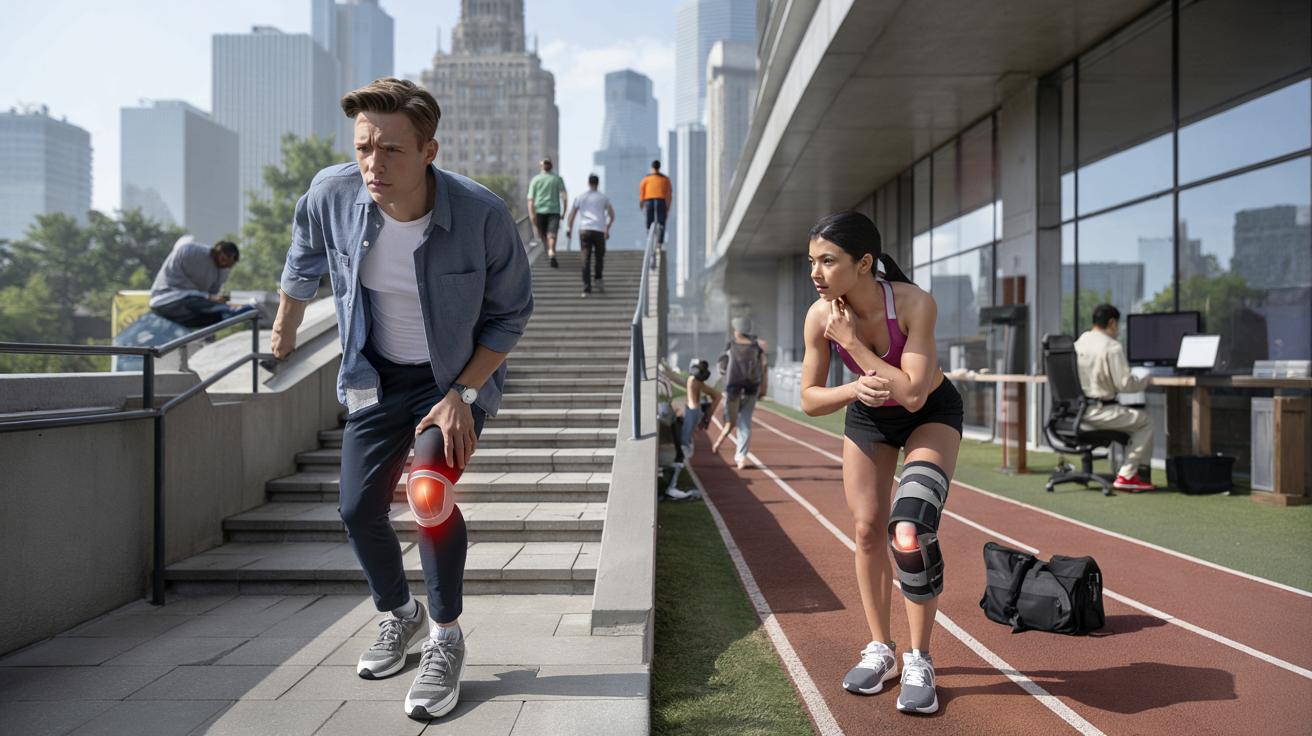
Across the globe, doctors are seeing knees, hips and backs wear out far earlier than medical textbooks predicted. Osteoarthritis, long tied to pensioners, is now reshaping the daily lives and future health of people who are barely halfway through their working lives.
Osteoarthritis is no longer just a disease of old age
For decades, osteoarthritis sat firmly in the “ageing” box. Stiff fingers, aching knees, a hip replacement after retirement. That story no longer fits the data.
Large epidemiological studies now show a sharp rise in osteoarthritis in adults aged 30 to 44. In 2019 alone, more than 32 million people in this age group were living with the condition, with nearly 8 million new diagnoses in a single year. The trend cuts across continents, but it is especially visible in higher‑income countries, where modern habits collide with the mechanics of the human body.
Osteoarthritis has shifted from a late‑life complaint to a mounting problem in the very years when people should be most active.
The knee is the prime target. Early knee osteoarthritis affects walking, running and climbing stairs, which means it strikes right at the heart of everyday independence. For a 35‑year‑old, that limitation is not a distant concern; it can shape career choices, childcare, social life and mental health for decades.
Minor pain or stiffness, shrugged off in early adulthood, can represent the start of a process that leads to irreversible joint damage by the mid‑forties. The body adapts silently at first: people change how they walk, avoid certain sports, or rely on painkillers just to get through the day.
Famous names, familiar problems
High‑profile athletes and performers have unintentionally become case studies for this shift. Former tennis champion Andy Murray, golfer Tiger Woods and singer Robbie Williams have all spoken about significant joint problems well before 45.
Their careers depend on physical performance, so their stories are visible. Yet their experiences mirror a tension many people feel: pushing the body, whether in sport, manual work or gym culture, against the long‑term health of their joints.
What early osteoarthritis reveals about modern lifestyles
Young joints do not fail out of nowhere. They reach breaking point because daily life tips the balance between damage and repair.
➡️ What if the key to fighting Alzheimer’s wasn’t in the brain, but in the muscles?
➡️ As the Moon Gradually Drifts Away From Earth, Our Days And Tides Quietly Change
➡️ The “brain‑eating” amoeba shrugs off chlorine and slips into our water systems
➡️ Abandoned in adulthood, this habit could quietly extend your wellbeing
➡️ Unexpected find: thousands of nests spotted beneath Antarctic ice
➡️ Caffeine Becomes A Molecular Switch Envisioned For Treatment
➡️ Gut microbiome and daily flatulence: unexpected numbers
➡️ An Oat-Based Diet Cuts Cholesterol In Just Two Days
Cartilage has limited capacity to heal, so the combination of extra weight, repeated impact and long hours of sitting slowly overwhelms it.
Excess weight: a mechanical and inflammatory burden
Among all known risk factors, high body mass index stands out. Extra kilos act in two ways. First, they apply greater mechanical load on weight‑bearing joints such as the knees, hips and spine. Every step hits harder. Second, fat tissue fuels low‑grade inflammation throughout the body. That inflammation changes the chemical environment inside the joint, weakening the cartilage matrix.
Cartilage cells work slowly and receive little direct blood supply. When they are constantly pushed and bathed in inflammatory signals, microscopic cracks appear. These do not heal overnight. Instead, they accumulate over years, eventually altering the smooth surface that allows bones to glide.
Too much training or none at all
Researchers increasingly point to a behavioural paradox. On one side sits the sedentary majority: long days at a desk, commuting in cars, evenings on sofas. On the other side are people who exercise intensively but not always wisely.
- Office work and screen time keep joints in the same position for hours, reducing joint lubrication and muscle support.
- High‑impact sports on hard surfaces, like road running, repeatedly jolt the same structures.
- Weight training without proper technique can overload knees, hips and spine.
- Contact sports bring a higher risk of ligament injuries that set the stage for earlier osteoarthritis.
Very little movement leaves cartilage under‑stimulated and muscles weak. Too much poorly structured movement slams the same tissues day after day. In both situations, the joint ecosystem becomes unbalanced long before pain reaches a level that sends someone to see a specialist.
Why current treatments often arrive too late
Once osteoarthritis is established, most available treatments aim to reduce pain rather than rebuild the joint. Non‑steroidal anti‑inflammatory drugs, injections of hyaluronic acid, corticosteroids or platelet‑rich plasma may provide relief. Some experimental therapies, such as injections of platelet‑derived extracellular vesicles, have shown encouraging effects in animal studies, particularly in female rats.
Yet none of these options has convincingly regenerated human cartilage at scale. By the time X‑rays or MRI scans show clear narrowing of the joint space or erosion of the bone, a substantial part of the cartilage has been lost. At that stage, even the most advanced biological treatment can only do so much.
The real race is not just against pain, but against time: identifying damage while cartilage can still be saved.
Scanning cartilage before symptoms appear
The most promising progress lies in early detection. Traditionally, osteoarthritis became visible only when structural damage appeared on imaging. New optical techniques aim to catch the disease while the joint still looks normal on a standard scan.
Laser‑based tools reading the chemistry of joints
One emerging approach uses infrared spectroscopy to analyse cartilage at the molecular level. Experimental devices combine a fine laser probe with an endoscope, allowing doctors to gently touch the cartilage surface and measure how it absorbs specific wavelengths of light.
Each pattern of absorption reflects a particular mix of proteins, lipids and sugars. Subtle shifts in these signals reveal early biochemical changes that precede cracks and thinning. Tests on human tissue samples outside the body show that this method can distinguish healthy cartilage from tissue already on a degenerative path, even when standard imaging still appears normal.
In practice, such a scanner could be used during a routine arthroscopy. While looking inside a painful knee with a camera, a surgeon might also pass the laser probe across different zones of cartilage. Software could immediately flag areas at higher risk, long before the patient qualifies for a joint replacement.
From crisis management to personalised prevention
Spotting osteoarthritis earlier completely changes the kind of care that can be offered. When joints are still structurally intact, lifestyle changes and targeted therapies have a greater chance of slowing progression.
For a 32‑year‑old with early signs of cartilage stress, a tailored plan today might delay or even avoid a prosthetic joint tomorrow.
Interventions can include supervised weight loss for people with obesity, physiotherapy programmes focused on muscle strengthening and alignment, and careful adjustment of sports technique. In some cases, surgical procedures to correct joint shape or redistribute load may make sense at a younger age, rather than waiting for extensive deterioration.
What young adults can do right now
Even without access to cutting‑edge scanners, there are concrete steps that reduce the risk of osteoarthritis or slow its advance:
- Keep body weight in a healthy range to lighten the load on knees and hips.
- Favour regular, moderate exercise such as walking, cycling, swimming or strength training with good technique.
- Limit repetitive high‑impact activities on hard surfaces, especially if pain or swelling appears.
- Address joint injuries promptly and complete rehabilitation, instead of “pushing through” discomfort.
- Break up sitting time at work with short movement breaks every 30 to 60 minutes.
For many people, the goal is not to avoid sport but to train smarter. A runner might alternate road sessions with treadmill or trail runs, invest in proper footwear, and integrate strength work and rest days. Someone who lifts weights could reduce heavy squats in favour of exercises that protect the knees, guided by a coach or physiotherapist.
Understanding key terms and long‑term scenarios
Several medical terms appear frequently in discussions about osteoarthritis. “Cartilage” refers to the smooth, rubbery tissue covering the ends of bones inside a joint. It acts as both shock absorber and low‑friction surface. “Synovial fluid” is the lubricant that circulates within the joint capsule, delivering nutrients and helping movement stay effortless. “Bone marrow lesions” on MRI signal stress inside the bone under the cartilage and often predict worsening pain.
Thinking long term can be sobering. A 30‑year‑old with untreated knee pain and signs of cartilage damage might face a progressive path: gradual loss of activity, weight gain, rising blood pressure, and greater risk of diabetes and depression. On the flip side, catching the problem early could flip that script: improved fitness, stable weight, more social participation and greater independence later in life.
| Scenario | Likely joint outcome at 50 | Broader health impact |
|---|---|---|
| Persistent pain ignored, no lifestyle changes | Advanced osteoarthritis, possible surgery | Reduced mobility, higher risk of chronic disease |
| Early assessment and tailored prevention | Slower progression, joint still functional | Better fitness, work capacity and quality of life |
The rise of osteoarthritis in young adults sends a clear message. Joints are not simply victims of age; they are mirrors of how we live, move and carry our bodies through the busiest years of life. Recognising that link early gives individuals and health systems a rare chance: to act before the damage is carved into bone.