Some people wake up with sore, red eyes and blame late-night screens.
For a few, the cause is far more unexpected.
Doctors are warning that a rare eyelid problem, long seen as a simple eye irritation, can sometimes flag a serious sleep-related breathing disorder hiding in the background.
When droopy, floppy eyelids hint at a deeper problem
Loose eyelid syndrome, known medically as “floppy eyelid syndrome”, makes the upper eyelids unusually soft and lax. Instead of hugging the eye firmly, the tissue stretches and sags.
In some people, the eyelid can even flip inside out during the night with a simple rub on the pillow. That leaves the delicate surface of the eye exposed and inflamed by morning.
Floppy, easily overturned eyelids, especially on waking, can be an early clue to undiagnosed sleep apnoea.
Patients often report burning, tearing, light sensitivity, or the feeling that there is sand in the eye. They may notice that these symptoms are worst first thing in the morning and slowly ease during the day.
Because the condition is relatively rare and not widely known outside specialist eye clinics, many people go years without a clear explanation. Some are treated repeatedly for “dry eye” or allergies, with only partial relief.
A single patient case that rang alarm bells
A recent case published in the New England Journal of Medicine, and discussed by researchers at Ars Technica, has pushed this obscure syndrome into the spotlight.
A 39‑year‑old woman arrived at an eye clinic complaining that her eyelids were flipping inside out when she woke. Every morning she was greeted by red, irritated eyes and a feeling of intense discomfort.
Her doctors noticed the classic signs of floppy eyelid syndrome. The upper lids were extremely loose and could be everted – turned inside out – with very little effort.
➡️ Abandoned in adulthood, this habit could quietly extend your wellbeing
➡️ What if the key to fighting Alzheimer’s wasn’t in the brain, but in the muscles?
➡️ Unexpected find: thousands of nests spotted beneath Antarctic ice
➡️ Because of our lifestyle, osteoarthritis is surging among young adults worldwide
➡️ Gut microbiome and daily flatulence: unexpected numbers
➡️ As the Moon Gradually Drifts Away From Earth, Our Days And Tides Quietly Change
➡️ The “brain‑eating” amoeba shrugs off chlorine and slips into our water systems
➡️ Caffeine Becomes A Molecular Switch Envisioned For Treatment
During the consultation, another piece of the puzzle emerged. The woman also snored heavily and woke feeling unrefreshed. She struggled with daytime sleepiness and low energy, symptoms often brushed off as “being busy” or “just tired”.
A sleep study later revealed she was stopping breathing 27 times per hour during the night – a level classed as moderate obstructive sleep apnoea.
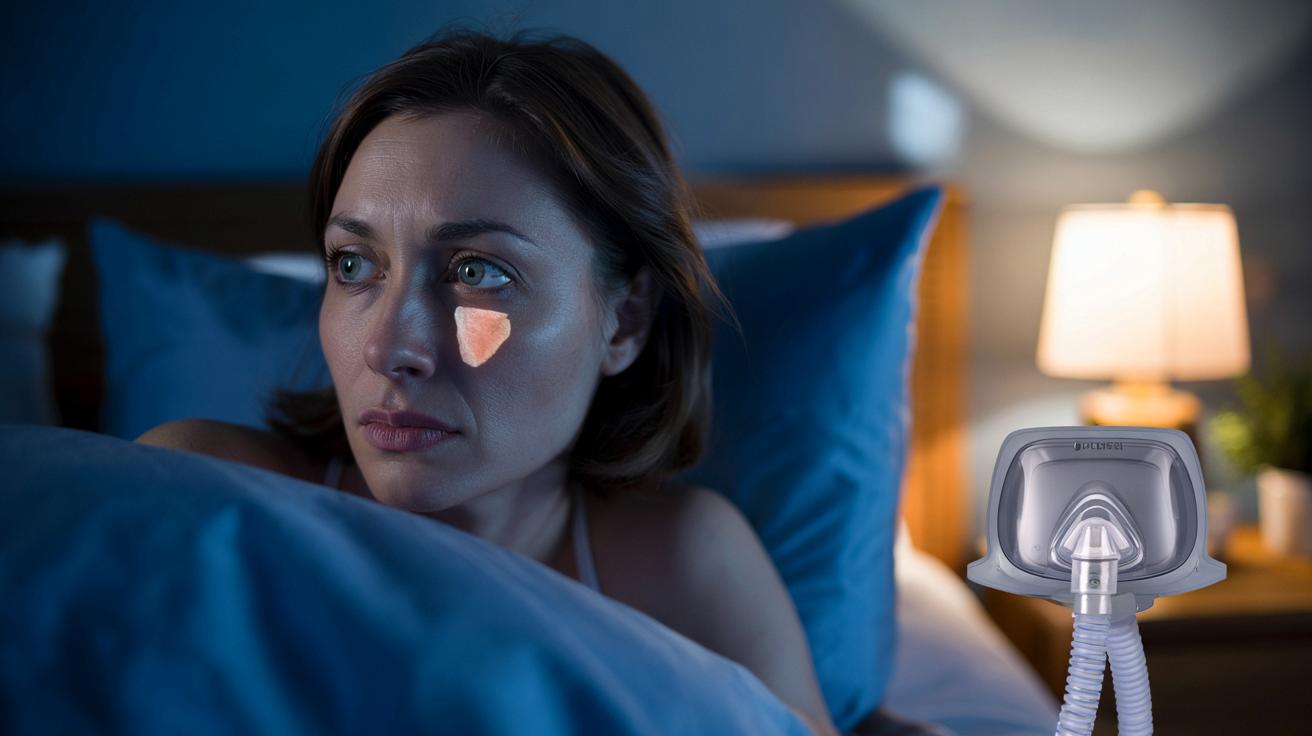
Once her sleep apnoea was treated with a CPAP device – a mask that keeps the airways open with continuous positive air pressure – something striking happened. Within two weeks, her eyelids stayed in place overnight. The redness and irritation faded, and she reported feeling more awake during the day.
Why loose eyelids and sleep apnoea are connected
Floppy eyelid syndrome is not just a cosmetic quirk. It reflects changes in the connective tissue that holds the eyelid in shape.
Inside each upper eyelid sits a firm, plate-like structure called the tarsus. This tissue, rich in elastic fibres, acts like scaffolding, keeping the lid taut and helping it close smoothly over the eye.
In floppy eyelid syndrome, these elastic fibres gradually break down. The tarsus becomes softer and stretchier. The lid loses its spring and stability.
Several mechanisms may drive this change:
- Inherited weakness in connective tissue
- Systemic connective tissue diseases
- Chronic mechanical rubbing during sleep
- Low oxygen levels linked to untreated sleep apnoea
In people with sleep apnoea, repeated night-time drops in oxygen can trigger biochemical cascades. Certain enzymes ramp up and start degrading elastin, the protein that gives tissues their stretch and recoil. Over time, the eyelid’s supporting framework thins and loosens.
This has a vicious-circle effect. The floppier the lid, the more likely it is to flip back during sleep, especially if the person sleeps on their side or stomach. The exposed eye becomes irritated, prompting rubbing, which adds further mechanical stress.
Symptoms that should push you to ask more questions
Eye specialists and sleep physicians say the combination of eyelid laxity and classic sleep apnoea complaints should raise suspicion.
| Eye-related signs | Sleep-related signs |
|---|---|
| Floppy, easily everted upper eyelids | Loud snoring, often reported by a partner |
| Red, gritty eyes on waking | Pauses in breathing during sleep |
| Recurrent “dry eye” not improving with drops | Morning headaches and dry mouth |
| Sensitivity to light in the morning | Unrefreshing sleep, chronic fatigue |
When several of these features line up, doctors now increasingly suggest a sleep assessment rather than just another bottle of lubricant eye drops.
Treating the eyelids by fixing the night-time breathing
Not every person with floppy eyelid syndrome will have sleep apnoea. Yet for those who do, tackling the breathing disorder can transform both their nights and their eyes.
For some patients, stabilising sleep apnoea with CPAP therapy tightens the eyelids, soothes irritation, and lifts daytime alertness in one go.
CPAP devices work by sending a gentle flow of pressurised air through a mask, stopping the upper airway from collapsing. This prevents the repeated oxygen dips that seem to weaken eyelid tissues.
Eye-focused measures often run alongside CPAP during the first weeks:
- Night-time eye shields or patches to keep lids closed and protected
- Thick lubricating gels or ointments before bed
- Avoiding sleeping face‑down into the pillow
- Temporary taping of the eyelids in severe cases
In milder cases, such measures plus good sleep apnoea control may be enough. For stubborn or advanced floppy eyelid syndrome, oculoplastic surgeons can tighten the lids surgically, reinforcing the tarsus and reducing laxity.
Why an eye problem can signal whole-body risk
Obstructive sleep apnoea affects millions of adults and is linked to high blood pressure, heart rhythm problems, stroke and type 2 diabetes. Many people live with it for years without realising.
The eyelids may provide an early warning that something is wrong. Because the tarsus is made of connective tissue rich in elastin, it can show the effects of chronic low oxygen and mechanical strain before other organs give obvious signs.
For doctors, this means a person arriving with red, irritated eyes and very loose lids is no longer just an ophthalmology case. It is a prompt to ask about snoring, night-time choking, and daytime sleepiness. A quick screening questionnaire can guide whether a full sleep study is worthwhile.
What this means for patients in everyday life
Someone who regularly wakes up with one eyelid partly flipped, or who needs to peel their eyelid back into place, should not ignore it. They should mention this clearly to an optometrist, GP or eye doctor, rather than just describing “dry eyes”.
For people already diagnosed with sleep apnoea, new or worsening eyelid laxity might signal that their treatment is not working properly, or that their condition has progressed. Adjusting CPAP settings, checking mask fit, or reviewing weight and lifestyle changes can be worthwhile.
Families and partners also play a role. A partner who notices both noisy snoring and strange eyelid behaviour in the morning can encourage a medical consultation. That outside perspective often speeds up diagnosis.
Key terms and real-life scenarios
Two terms come up repeatedly in this conversation: floppy eyelid syndrome and obstructive sleep apnoea.
- Floppy eyelid syndrome: A condition where the upper eyelids are unusually loose, easily turned inside out, and associated with chronic eye irritation.
- Obstructive sleep apnoea: A disorder where the upper airway collapses repeatedly during sleep, causing pauses in breathing, brief awakenings, and oxygen drops.
Imagine a 45‑year‑old office worker who chalks up their exhaustion to stress. They snore loudly and need strong coffee to get through each day. Their GP prescribes lubricating drops for red morning eyes but does not look closely at the lids.
Years later, the same person attends an eye clinic for persistent irritation. This time, the specialist notices very floppy lids and asks about sleep. A sleep study finally reveals moderate to severe apnoea. CPAP is started, and gradually the patient’s energy, mood and eye comfort all improve. Early recognition of the eyelid changes could have brought that turnaround much sooner.
Loose eyelids might seem like a small cosmetic detail. For some, though, they are the tip of a much larger iceberg – a visible signal that the body is struggling every night just to breathe.